Is Nepal Good for a Honeymoon? An Honest Look

Nepal is a genuinely good honeymoon destination for couples who prefer Himalayan views, temple cities and jungle wildlife over beaches and resorts, and it costs less than the Maldives or Bali. But hot water, power and WiFi can be unreliable, altitude needs planning, and the monsoon (June to September) hides the mountains. This guide weighs both sides, compares Nepal with the Maldives, Bali and Sri Lanka, and covers visas, insurance, best months and trip length.
The honest answer is yes, but with conditions that matter enough to state clearly rather than burying in fine print.
Nepal is a genuinely good honeymoon destination for couples who want more from a honeymoon than a beach, a pool, and a spa menu. It is the wrong choice for couples whose honeymoon vision is built around uninterrupted luxury service, reliable hot water, and the kind of resort infrastructure that tropical island destinations have spent decades optimising. The distinction is not about budget. Nepal's top-end hotels and lodges are genuinely good. It is about what kind of travel the honeymoon is for.
If the couple in question finds altitude, temple cities, jungle wildlife, and mountain backdrops more romantic than sand and cocktails, Nepal makes a strong case. If the primary requirement is effortless comfort and the certainty of a warm evening swim, it makes a weak one.
This article gives the honest version of both sides.
What Nepal Does Genuinely Well for Honeymooners
The Visual Setting
Nepal's landscapes produce the kind of visual drama that no resort can manufacture and that most tropical beach destinations simply do not have.The Annapurna range reflected in Phewa Lake at dawn from a Pokhara lakeside hotel room is not something that happens at any beach in the Maldives. The medieval courtyards of Bhaktapur at 7 a.m. before the tourist groups arrive, with the woodcarving on the temple facades catching the morning light and the smell of incense from the morning puja at the neighbourhood shrines, do not exist anywhere else. The rhododendron forests on the Himalayan foothills in March, with snow-capped peaks above and flowering red and pink forest below, are the specific combination that Nepal produces and that no other country in the region replicates at the same scale.
These are not consolation prizes for the absence of a beach. They are genuinely extraordinary, and for the couple for whom extraordinary landscape matters more than comfortable infrastructure, Nepal's visual setting is a stronger honeymoon argument than most of the world's established honeymoon destinations.
The Cultural Depth
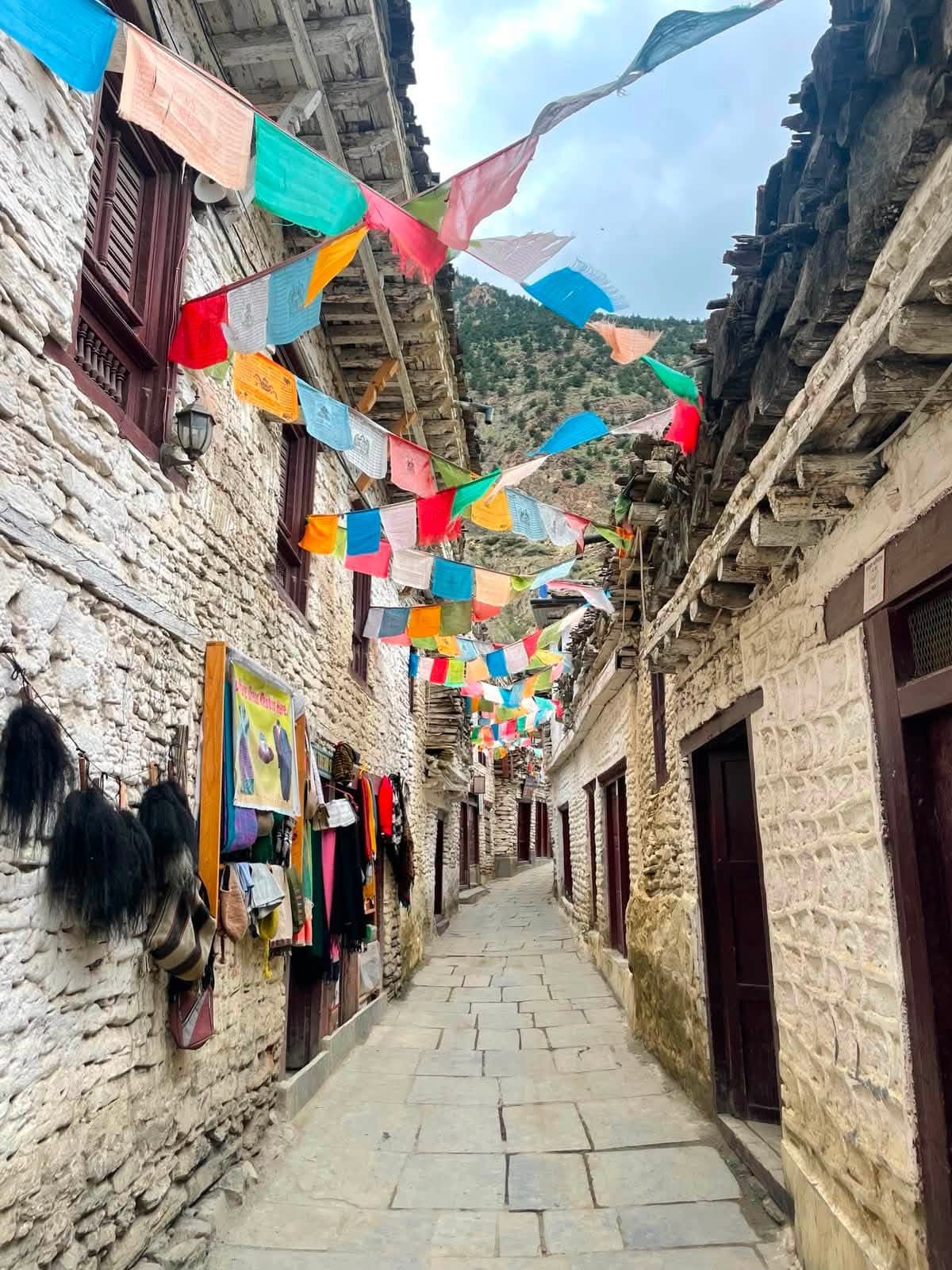
Nepal's culture is not a backdrop to the tourism experience. It is the thing itself. The Kathmandu Valley contains more UNESCO World Heritage Sites per square kilometre than anywhere else on earth, and the temples, stupas, and medieval urban environments are not preserved heritage sites managed for visitor experience. They are living religious and cultural centres where the daily life of the communities around them is genuinely embedded. The Pashupatinath temple on the Bagmati River, the Boudhanath stupa's circumambulation circuit with its resident Tibetan Buddhist community, the Durbar Squares of Kathmandu, Patan, and Bhaktapur where the traditional Newar culture of the valley is still practised rather than displayed — these are the cultural experiences that make Nepal's honeymoon case on the dimension that no beach holiday addresses.
For couples who find shared encounters with something genuinely new and genuinely old simultaneously to be romantic, Nepal's cultural depth is the strongest argument the country has.

The Wildlife
Chitwan National Park in the Terai lowlands is a UNESCO World Heritage Site that holds one of the most intact populations of one-horned rhinoceroses in Asia, wild Bengal tigers, sloth bears, crocodiles, and over 500 bird species. A two-night stay at one of Chitwan's jungle lodges or tented camps, with canoe rides on the Rapti River and guided jungle walks, is a honeymoon experience that the tropical island circuit does not include and that adds a genuinely different dimension to a Nepal circuit.
Bardia National Park in far western Nepal offers the same wildlife in a significantly less visited setting. Couples who want the tiger and rhino possibility without the Chitwan mainstream choose Bardia, and the absence of the main tourist infrastructure at Bardia is something that either appeals or does not depending on the couple.

The Cost Advantage
Nepal's luxury accommodation costs significantly less than equivalent properties in the Maldives, Bali, Sri Lanka, or the Indian Ocean destinations that compete for the South Asian honeymoon market. A heritage hotel suite in Kathmandu at the level of the Dwarika's or the Gokarna Forest Resort costs what a mid-range resort room costs in the Maldives. A Chitwan tented camp at the top of the lodge hierarchy costs what a standard bungalow costs in Bali's upmarket area.
For couples with a defined honeymoon budget, this differential means Nepal either delivers more quality for the same spend or frees budget for experiences that the beach destination equivalent uses for accommodation alone.
What Nepal Does Not Do Well
Consistent Infrastructure
The honest limitation of Nepal as a honeymoon destination is infrastructure consistency. Hot water that is promised and cold water that arrives. Power cuts that disrupt the evening at a critical moment. WiFi that works in the lobby and does not work in the room. Roads that require four hours to cover eighty kilometres. These are not occasional failures of specific properties. They are the condition of a developing country that has been improving its tourism infrastructure rapidly but has not yet reached the standard that couples accustomed to seamless resort service expect without thinking about it.
The luxury hotels in Kathmandu manage this better than the mid-range properties, and the top-tier Chitwan lodges manage it well. But outside these specific properties, infrastructure unpredictability is the consistent feature of Nepal travel that a honeymoon requires building tolerance for rather than engineering around.
For couples whose enjoyment of a trip is significantly affected by things not working as specified, Nepal requires either a realistic expectation adjustment or a trip structure that keeps them in the specific hotels that have achieved consistent service standards, which limits the circuit to Kathmandu, Pokhara, and Chitwan without the more adventurous additions.

The Altitude Question
Nepal's most visually dramatic locations are at altitude. Nagarkot is at 2,195 metres. Bandipur is at 1,030 metres. The Annapurna Circuit approaches begin climbing immediately above Pokhara. The Upper Mustang circuit reaches 3,840 metres at Lo Manthang.
For most couples these elevations produce no significant health effects. For some couples, particularly those who have not previously spent time at altitude, headaches and disturbed sleep at Nagarkot or on the Annapurna foothills are the first night's experience rather than the romantic mountain sunrise the brochure shows. The altitude at Nagarkot's level is mild and most people adapt within a day. The stronger altitude effects at 3,000 metres and above are more significant and require acclimatisation planning that a tight honeymoon schedule does not always accommodate.
This is not a reason to avoid Nepal. It is a reason to build an honest altitude acclimatisation schedule into any itinerary that includes Nagarkot, the Annapurna foothills, or anything above 2,000 metres, and to know that the first night at altitude may be less comfortable than the second.
The Monsoon Window
Nepal's Monsoon from June through September is a genuine limitation for honeymooners planning within those months. The mountain views that define Nepal's most romantic visual settings are obscured by clouds on most Monsoon days. The outdoor dining, lakeside evenings, and viewpoint sunrises that Pokhara and Nagarkot produce in October and April are significantly less reliable in July. The trekking routes that form the adventurous dimension of a Nepal honeymoon are wet and muddy during the Monsoon in ways that change the experience substantially.
If the honeymoon date falls within the Monsoon months, the honest guidance is either to adjust the date if possible, plan specifically for the Upper Mustang rain shadow area that receives significantly less Monsoon precipitation, or accept that a Monsoon Nepal honeymoon is a different and specifically cultural experience rather than the mountain-view and outdoor Nepal that most couples picture when they choose the destination.
Nepal vs the Alternatives: An Honest Comparison
Nepal vs the Maldives
The Maldives is the default choice for the South Asian luxury beach honeymoon and it does exactly what it offers. Overwater bungalow, reef snorkelling, sunset, excellent food, seamless service. There is nothing wrong with this.
Nepal offers none of those things and offers instead everything the Maldives does not have: cultural depth, wildlife, mountains, ancient cities, and a travel experience that changes the couple rather than simply relaxing them. Couples who come back from the Maldives feel rested. Couples who come back from Nepal feel they have been somewhere. Both outcomes are valid. The question is which one the couple in question is after.
Nepal vs Bali
Bali and Nepal share more than the Maldives and Nepal do. Both offer genuine culture, temple architecture, and a natural landscape that is not beach-centred. Bali's Ubud area, with its rice terraces, temple culture, and artistic tradition, is the Balinese equivalent of Nepal's Kathmandu Valley in some respects.
Bali has better infrastructure consistency, warmer weather, and a beach option that Nepal cannot match. Nepal has more dramatic mountain scenery, older and less touristically developed culture, and a natural wildlife dimension that Bali does not have. Couples who want the cultural and landscape depth of Asia without the beach have a genuine choice between the two destinations, and the honest difference is that Nepal's cultural heritage is older and its natural scenery more extreme, while Bali's infrastructure is more reliable and its climate more consistently comfortable.
Nepal vs Sri Lanka
Sri Lanka is the other South Asian alternative that competes for culturally-oriented honeymooners. Sri Lanka has the beach option and the cultural option within a single island, ancient Buddhist sites, colonial-era tea plantation accommodation, and wildlife in Yala National Park. It is a strong competitor for the Nepal honeymoon consideration.
The distinction is in scale. Sri Lanka's cultural sites, while significant, operate at a different scale from Nepal's Himalayan landscape. A couple for whom the Himalayas specifically matter has only Nepal. A couple for whom the overall experience of South Asian culture, wildlife, and landscape matters without the specific requirement of Himalayan mountains may find Sri Lanka's combination of beach and culture a more convenient version of a similar overall experience.
Who a Nepal Honeymoon Is Actually For
The couples who come back from a trip to Nepal having had the honeymoon they wanted share some characteristics that are worth naming honestly.
They were interested in each other's reaction to something genuinely new rather than in the comfort of a familiar resort environment. They found the navigation of a country that requires attention and occasional flexibility more engaging than frustrating. They had at least one moment at a viewpoint or a temple where the conversation stopped because the thing in front of them was sufficient without commentary. They ate dal bhat in a guesthouse dining room and found it more memorable than the hotel restaurant dinner they also had. And they came back with stories that the other one cannot tell in the same way because they were both there but experienced it slightly differently.
Nepal produces this kind of honeymoon more reliably than most destinations because it is still genuinely capable of surprising people who thought they knew roughly what to expect. The country's specific combination of ancient culture, extreme landscape, and developing-world infrastructure that still occasionally fails conspires to produce a version of travel that is less predictable than a beach resort and more worth remembering than one.
That is not the right honeymoon for everyone. For the couples it is right for, Nepal is a genuinely good choice.

Practical Considerations Before Booking
Visa: Most nationalities can obtain a Nepal visa on arrival at Tribhuvan International Airport in Kathmandu. The process takes 20 to 45 minutes depending on the queue. Confirm current visa requirements for your specific passport before booking.
Vaccinations: Check with a travel health clinic for current recommendations. Standard advice typically includes Hepatitis A and B, Typhoid, and ensuring routine vaccinations are current. The specific recommendations depend on your itinerary and health history.
Travel insurance: Essential rather than optional for Nepal travel. Ensure the policy covers helicopter evacuation, which is the standard emergency response for altitude or trekking incidents in Nepal's mountain areas and which is expensive enough that uninsured helicopter costs can be catastrophic.
Best months: October and November for the clearest mountain views and best weather. March and April for the rhododendron season and warmer spring conditions. Avoid June through September for most itineraries.
Trip length: Ten to twelve days is the minimum for a Nepal honeymoon tour that covers Kathmandu, Pokhara, and Chitwan without feeling compressed. Fourteen days allows for a more relaxed pace and the addition of a hill station overnight or a short foothills walk.
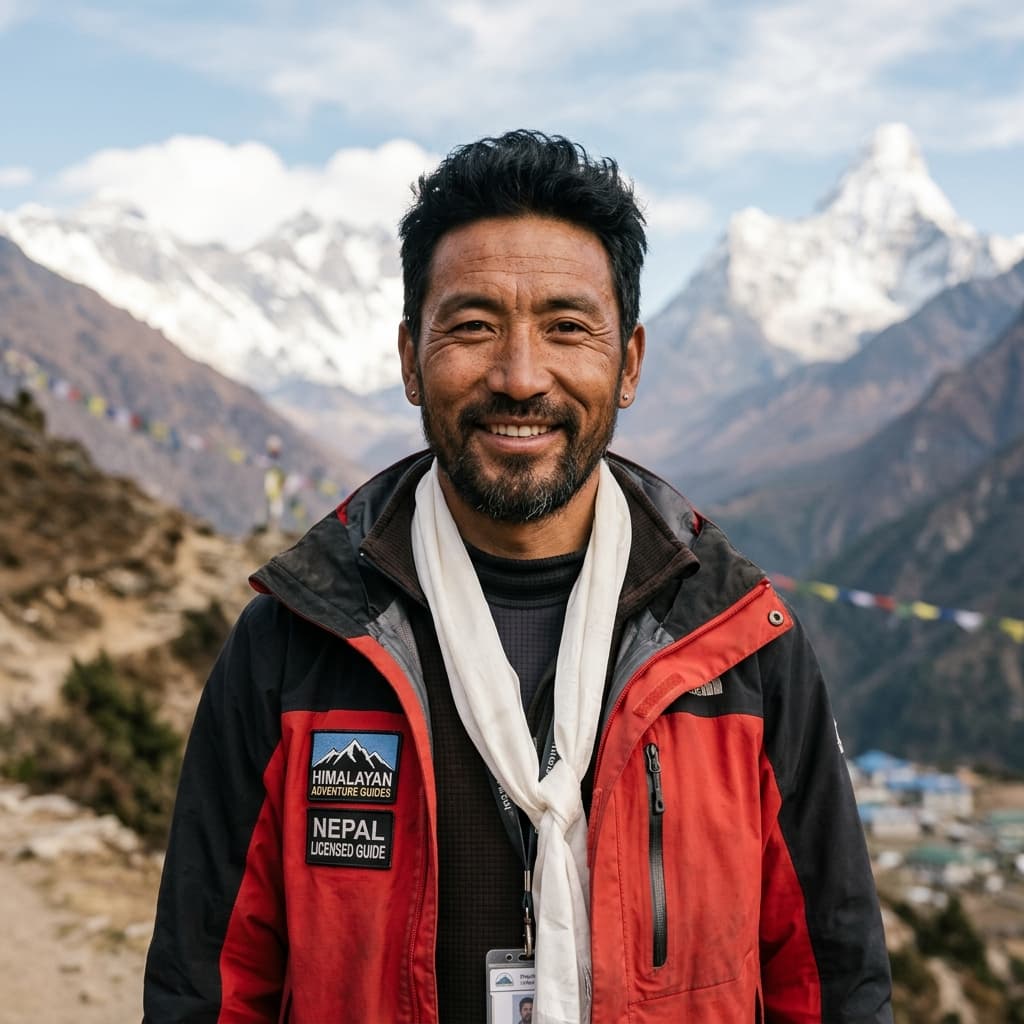
Written by Lhakpa Sherpa
Licensed Himalayan Specialist✓ Verified AuthorPublished directly by our local destination management desk in Thamel, Kathmandu. We design tailor-made private tours, trekking expeditions, and helicopter flights across Nepal with zero middleman markups.